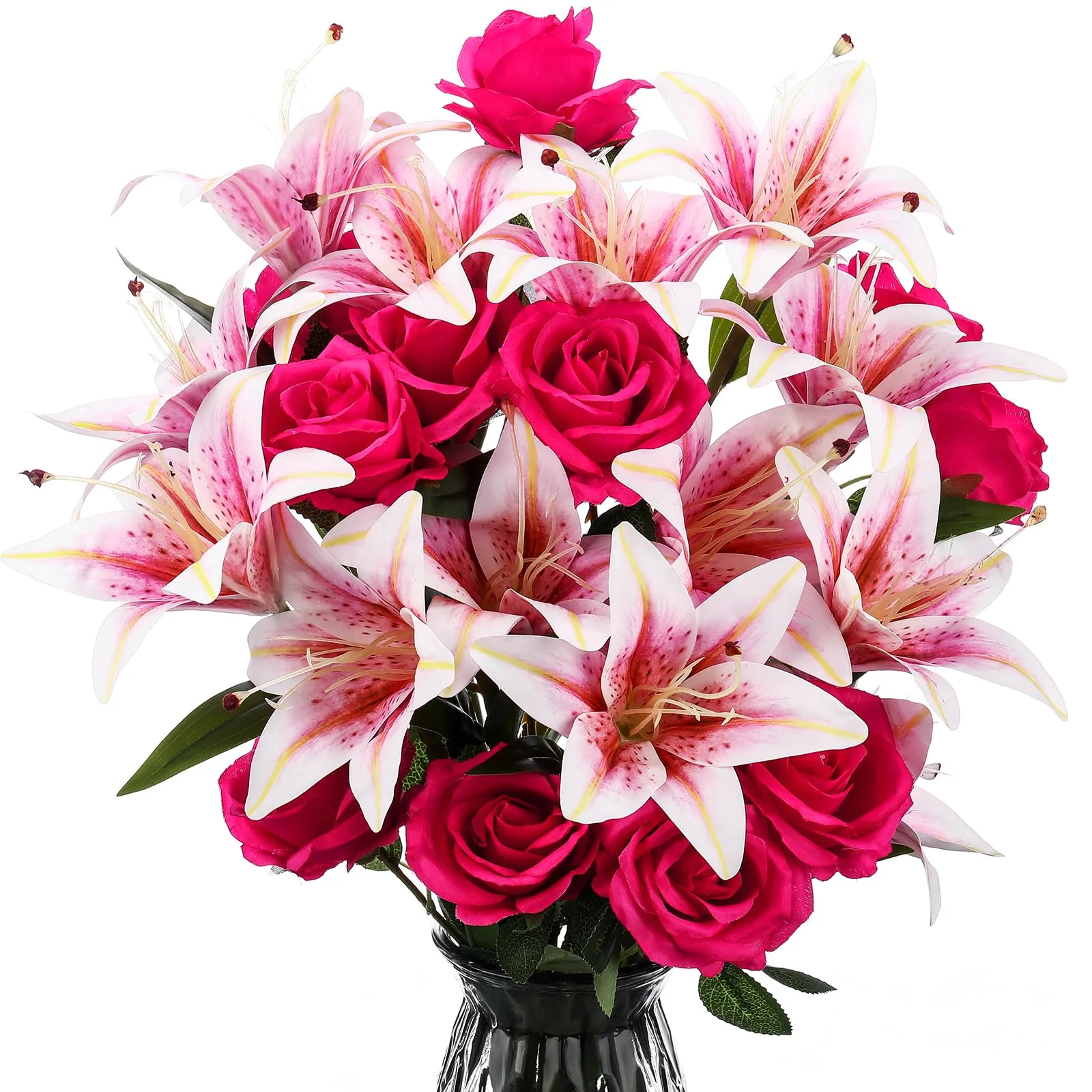
A wedding is the most counted event most people ever run. Guests are counted, chairs are counted, slices of cake are counted to the half. And then, oddly, the flowers are guessed. Couples who can tell you the exact number of napkins on order will wave a hand at the arch and say it probably needs a few bunches. The arch does not need a few bunches. It needs a number, and the number is knowable.
We sell stems in counted packs because the alternative is guesswork, and guesswork ends one of two ways: a bare arch photographed from its one good angle, or a second box racing to arrive the morning of the rehearsal. Both are avoidable with twenty minutes of arithmetic. The arithmetic starts with what people actually build. Buyers thread our silver roses into bridal bouquets for a black, red and silver wedding, and an arch reads as lush at about one head for every ten centimetres of dressed bar. From there it runs to the aisle, the tables, the wearables, and the quiet discipline of colour that holds it all together.
Why silk changed the arithmetic
Fresh flowers are bought by the stem from a florist who does the counting for you, and that service is a real one. Silk moved the counting to the couple, and it changed three other things along the way. Silk stems are built on wire, so an arrangement holds the angle it was bent to. They are assembled days ahead, so the work happens on a calm Tuesday instead of a frantic Saturday morning. And they survive the day itself: heat, wind, a toddler with opinions, the long drive between ceremony and reception.
The trade is that nobody hands you the count. A florist looks at an arch frame and knows. A couple looks at the same frame and sees a question mark shaped like a doorway. The conversion is learnable in a minute: the swept parts of the frame want a head every ten centimetres, and the corners want a fist of twenty on top of that. Measure the frame, run the sums, and the number stops being a guess.
One more quiet advantage belongs on the scale before the counting starts: silk splits the work from the day. Every arrangement a wedding needs can be finished a week early, photographed, adjusted and finished again, and the wedding morning inherits a solved problem instead of a live one. Couples who have done it both ways write about that difference more than about any other.
The arch: sixty to eighty stems before it reads as full
Stand across a room from a wedding arch and your eye does something unforgiving: it averages. It does not count blooms, it reads density, and below a certain density an arch reads as sparse no matter how carefully the stems are placed. That threshold sits around sixty full-size rose heads for a standard two-metre arch dressed on the top bar and one leg. Dress both legs and the corner clusters generously and you are at eighty before anything is wasted.
The classic build is asymmetric: one heavy corner where the top bar meets a leg, a lighter sweep along the top, and a grounded cluster at the opposite foot. The heavy corner alone swallows twenty to twenty-five heads. The sweep takes another twenty at one head roughly every ten centimetres, and the foot cluster takes fifteen. Add greenery between blooms and spares for the seams, and the count lands exactly where our eighty-piece pack was aimed.
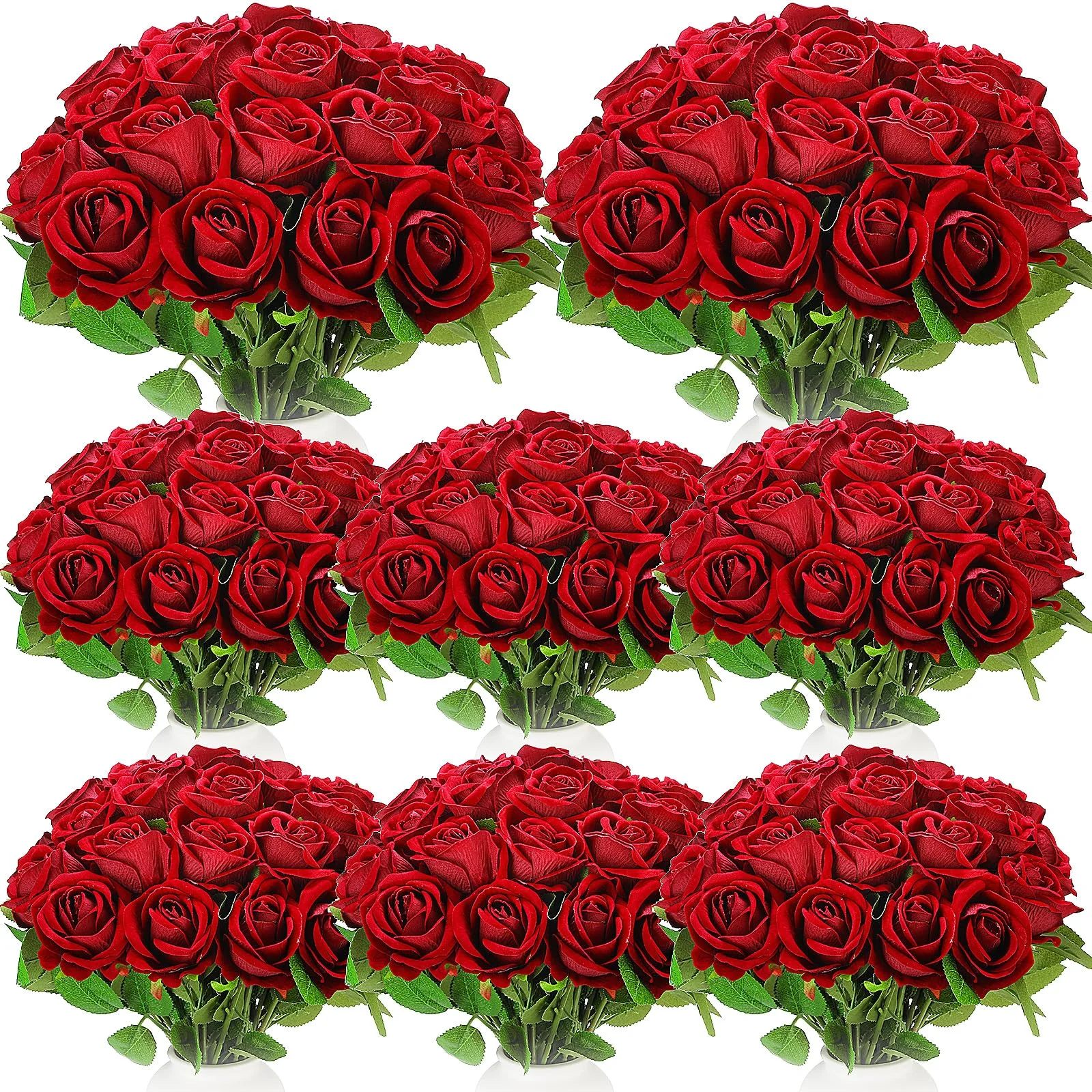
Long-Stem Roses, 80 pcs, Burgundy
Roses in Bulkin 8 colours
★★★★☆ 4.4 · 258 family reviews
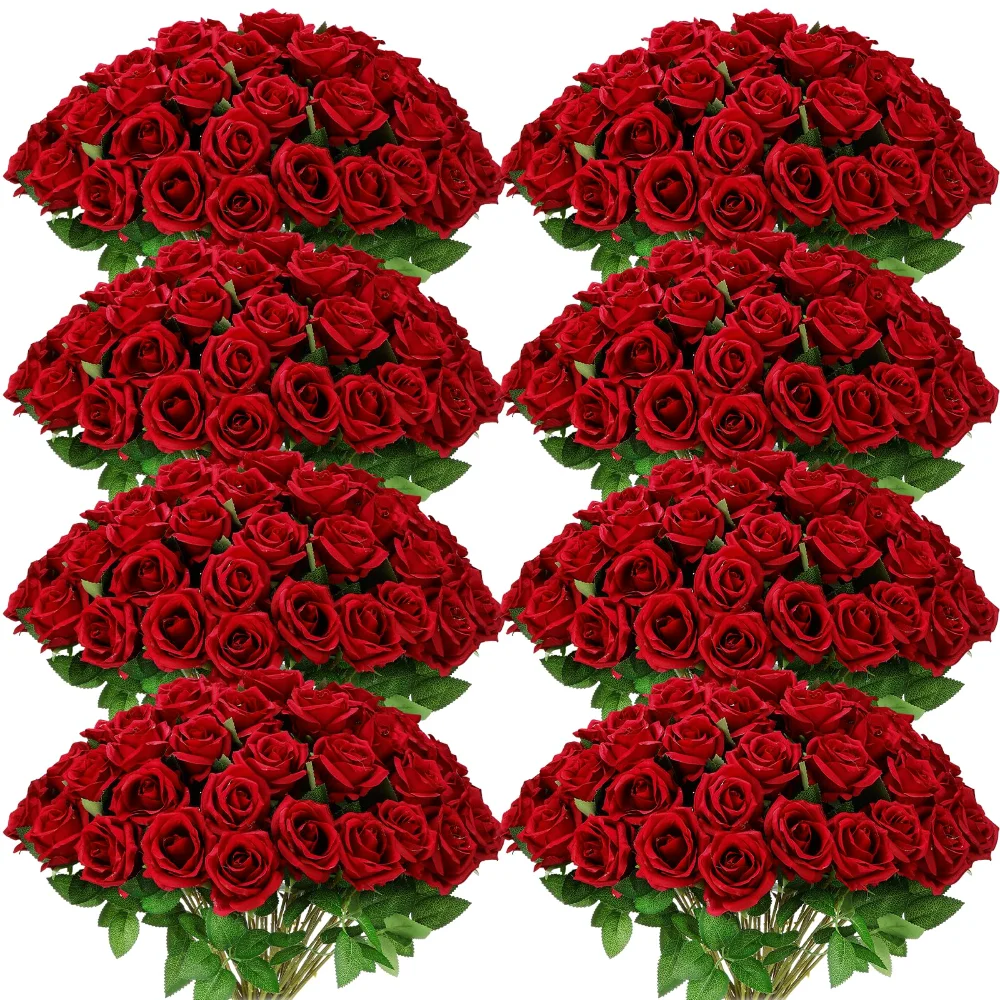
Long-Stem Roses, 120 pcs, Red
Roses in Bulkin 3 colours
★★★★★ 4.5 · 129 family reviews
A note on the frame itself. Rose heads on wired stems can be lashed directly to the bar with floral tape, but the fuller look comes from building three or four bouquet blocks on the table first, then fixing the blocks to the frame and filling seams with single stems. Blocks survive transport. Single-stem builds do not, and a re-dress in the venue car park is nobody’s favourite tradition.
The aisle and the ceremony room
Aisle decor is counted per chair row, and restraint wins. A marker every second row reads intentional. A marker on every chair reads like inventory. For a ceremony of ten rows, that is five markers a side, ten in all, at two to three stems each: another thirty stems, or one forty-piece pack with spares left for the signing table.
Flower balls are the other aisle language. Hung from shepherd hooks or chair backs, one ball replaces a hand-tied cluster and arrives already spherical, which is more of a gift than it sounds at ten in the evening two days out. A dozen covers an aisle with two left for the doorway.
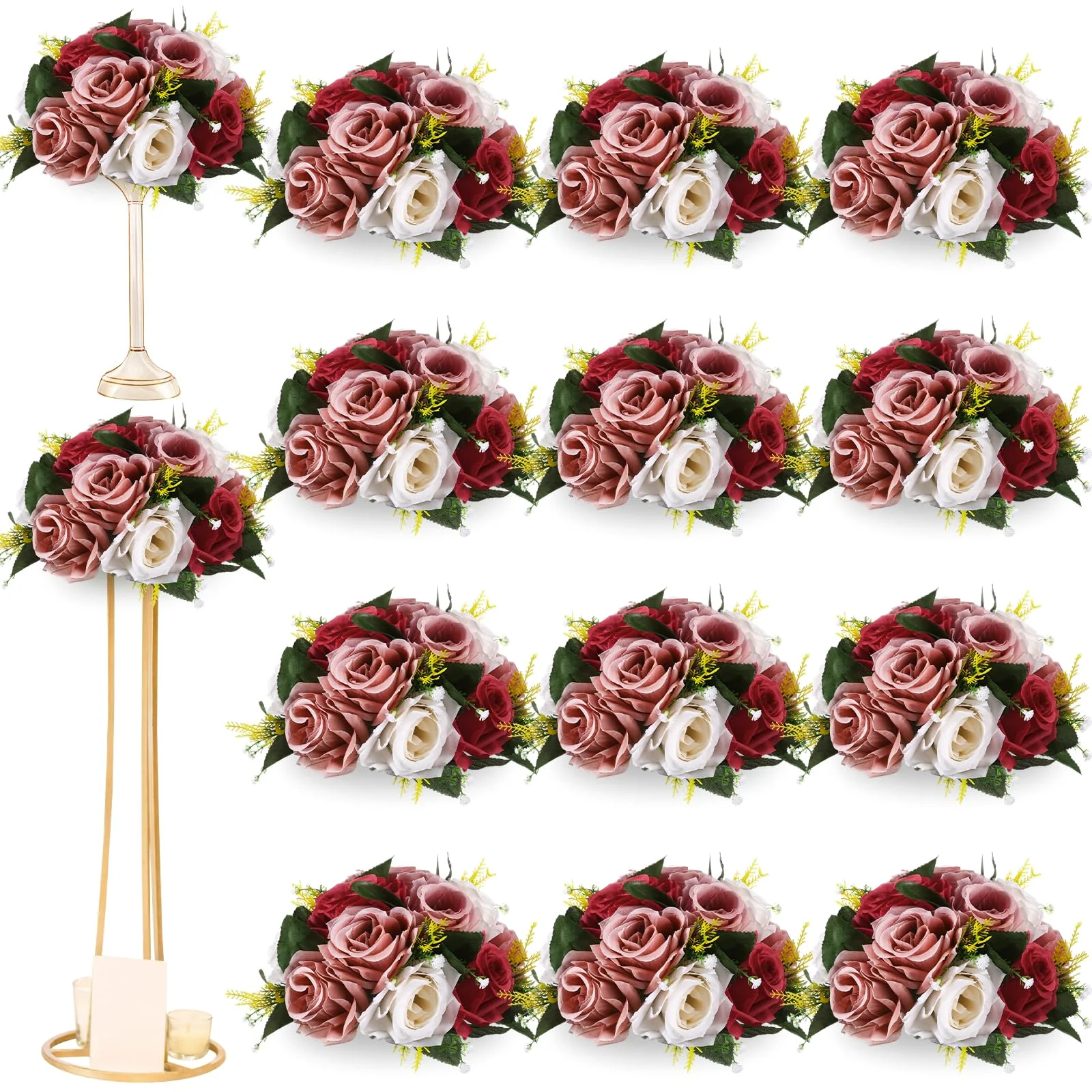
Rose Flower Balls, 12 pcs, Creamy White
Rose Flower Balls
★★★★★ 4.7 · 161 family reviews
Tables: the two-to-four rule
Centrepieces are where counts drift, because tables multiply quietly. The rule that survives contact with a real reception is two to four full-size heads per low vase arrangement, built out with greenery and one accent bloom, and never more than the vase mouth can hold without splaying. A ten-table reception at three heads a vase is thirty heads. A single forty-piece pack covers it with spares, and the spares are not decoration for the box: a creased head, a vase that wants one more, a cake table that was forgotten on every list, all of it comes out of the margin.
Taller arrangements change the cut length, not the count. Stems for a tall vase are left near full length and the count per vase stays in the same band, because height reads as presence and the eye forgives openness in a tall build that it punishes in a low one.
| The piece | Stems it takes | Where the count comes from |
|---|---|---|
| Arch, one leg dressed | 60 to 65 | Heavy corner 20 to 25, top sweep about 20, foot cluster 15, spares for seams |
| Arch, both legs dressed | 75 to 85 | Second leg adds a lighter sweep and a second foot cluster |
| Aisle, ten rows | about 30 | A marker every second row, both sides, 2 to 3 stems each |
| Low centrepiece | 2 to 4 | Vase mouth sets the ceiling, greenery does the filling |
| Tall centrepiece | 3 to 4 | Full-length stems, height reads as fullness |
| Sweetheart table | 6 to 8 | It is photographed more than any other table |
| Signing and cake tables | 4 to 6 between them | The tables every planning list forgets |
Run the columns for a middling wedding, an arch with one dressed leg, ten aisle rows, ten guest tables, and the total lands between one hundred twenty and one hundred forty stems. That is one eighty-piece pack and one forty-piece pack in the main colour, plus a twenty-piece pack in an accent shade, and the arithmetic closes with spares in hand rather than a shortfall at midnight.
Colour is a discipline, not a decision
The colour conversation usually starts and ends with a name: burgundy, dusty pink, ivory. The trouble is that a name is not a shade. Our own whites split three ways, a pure white with a blue cast, a warm cream, and a champagne that photographs almost gold beside the other two. Each is right alone. Mixed in one arrangement by accident, they argue, and they argue loudest exactly where weddings are photographed most, in close-ups against a white dress.
The discipline is simple and it is the one we build our packs around: one shade, one pack, one dye lot. Buy the arch and the tables from the same colour of the same line, in as few boxes as the count allows. When you deliberately want two shades, make the split obvious, a burgundy arch over ivory tables reads as design, while a slightly mismatched burgundy against another burgundy reads as an error nobody can name from across the room.
The same logic decides between colour families on our own shelf. The Hotop range keeps roses in more than a dozen shades precisely so that a wedding can stay inside one line: arch, aisle and tables from a single dye discipline, with the accent shade chosen on purpose rather than inherited from whatever a mixed kit contained.
The build weekend, in order
Ten days out
Unbox everything onto one table and count it against the plan. This is the moment a short pack or a crushed corner can still be fixed calmly. Stems ship folded, so stand them loosely in a tall box and let gravity start the work.
The week of
Shape the heads. Silk petals hold the geometry of the box until told otherwise: cup each bloom in one hand and open the outer petals with a thumb, working in from the outside ring. Thirty seconds a head, and the difference between shaped and unshaped reads clearly in photographs. Bend each stem into a soft curve rather than leaving it factory-straight. Nothing in a garden grows at ninety degrees.
Two days out
Build the bouquet blocks for the arch and the centrepieces in their vases. Line the finished vases into shallow boxes for transport, one layer only. Blocks for the arch travel in a separate box with the seam stems bagged and labelled, and the label is the kindness your future self will thank you for.
The morning
Fix blocks to the arch frame, fill the seams, stand back ten paces and look with the averaging eye rather than the counting one. Whatever reads thin from ten paces gets a spare stem. Whatever reads fine is fine, and the box of leftovers goes back in the car, where it belongs until the cake table is discovered bare at noon.
The bouquet: twelve stems in the hand, three in reserve
The bridal bouquet is the one arrangement that gets photographed at arm’s length all day, and it is built on fewer stems than most people expect. A hand-tied round bouquet reads as full at ten to fourteen heads, bound tight so the blooms sit shoulder to shoulder rather than nodding apart. Past fifteen the handle thickens beyond a comfortable grip, and the shape stops being a dome and starts being a shrub.
Build it in a spiral: each stem added at a slight angle to the last, turning the bundle a quarter turn between stems. The spiral is what lets a bouquet be set down flat and picked up unbruised. Bind with floral tape at the top of the grip and again at the base, then wrap with ribbon and pin. Wired stems make the spiral forgiving in a way fresh stems never are: an angle that lands wrong is bent back and nobody is the wiser.
Count the bouquets off the wedding party list: one bridal, one for each attendant at eight to ten heads, one toss bouquet at six, and boutonniere heads at one each with a leaf behind. A party of five works out at fifty to sixty heads, and that number is the reason the sixty-count and eighty-count boxes exist in the shape they do. The toss bouquet deserves its own line on the list precisely because it is the one that gets forgotten and then improvised, at speed, out of the centrepiece nearest the door.
Beyond roses: the tropical table and the autumn one
Roses carry the classic wedding, but the same arithmetic dresses every other palette on our shelf. A luau-leaning reception runs on hibiscus heads scattered two to a place setting and clustered five or six at the buffet, with a palm-leaf centrepiece anchoring each table. Hibiscus is sold flat by the two dozen, so a ten-table tropical reception is one pack of heads for the settings and one centrepiece set for the anchors.
An autumn wedding trades bloom count for stem drama. Berry stems and eucalyptus sprays build height instead of density, three to five stems in a tall vase, and the rule from the tall-centrepiece section applies unchanged: height reads as presence, so the count stays low while the look stays generous. A dozen berry stems dress four tall vases with spares, and the leftover pair belongs on the mantel at home, which is where autumn weddings quietly continue for months.
The mistakes we read about most
We read what buyers write about every family on this shelf, week after week, and the happy notes and the unhappy ones split along one line. The happy ones counted: the silver roses threaded into bouquets for a black, red and silver wedding were ordered against a stem list, not a feeling. The unhappy ones ordered by photograph, and a box that looks enormous in a product picture holds exactly the number printed on it. A plan built on the impression rather than the number comes up short at the arch, always at the arch, because the arch is where the count runs largest.
The second is skipping the shaping pass. Silk heads ship folded, and a bouquet built from unshaped heads photographs exactly like what it is, a box of flowers arranged in a hurry. The thirty seconds per head is the single highest-return half hour of the whole build weekend.
The third is mixing lines to save a little: an arch begun in one line and topped up from another, in what looked like the same shade online. The seam always shows, always in photographs, and always after it is too late to redo. One line, one shade, one order. The couples who write the happiest notes are the ones who counted once, bought once, and spent the wedding morning drinking coffee.
Transport: the part nobody rehearses
Silk survives the drive; arrangements survive it only if they are packed like arrangements. Low centrepieces ride one layer deep in shallow boxes, vases touching, blooms clear of the lid line. Tall vases ride empty, stems bundled flat beside them, and marry at the venue in five minutes a table. The arch blocks get the firmest box in the car and the seam stems ride bagged on top, because the seams are the first thing needed and the smallest thing lost.
Plan the unload before the load: arch pieces out first while the energy is high, tables second, wearables last and kept cool. One person carries from the car and one person places inside, because two people doing both jobs pass each other in doorways all morning. The box of spares stays shut in the boot until the room has been walked once with the averaging eye. This sounds obvious in August. In a September car park, in a dress, it is the whole difference between composure and improvisation.
The wearables: where the arch meets the wrist
Corsages and wearable florals sit in our celebration aisle rather than the flower shelf, but they are counted off the same guest list logic: one wrist corsage per member of the wedding party being honoured, plus two spares, because elastic bands and champagne toasts have a known relationship. Pearl and rhinestone corsage bands come in small counted sets for exactly this, and the spare is the difference between a broken band being a story and being a scene.
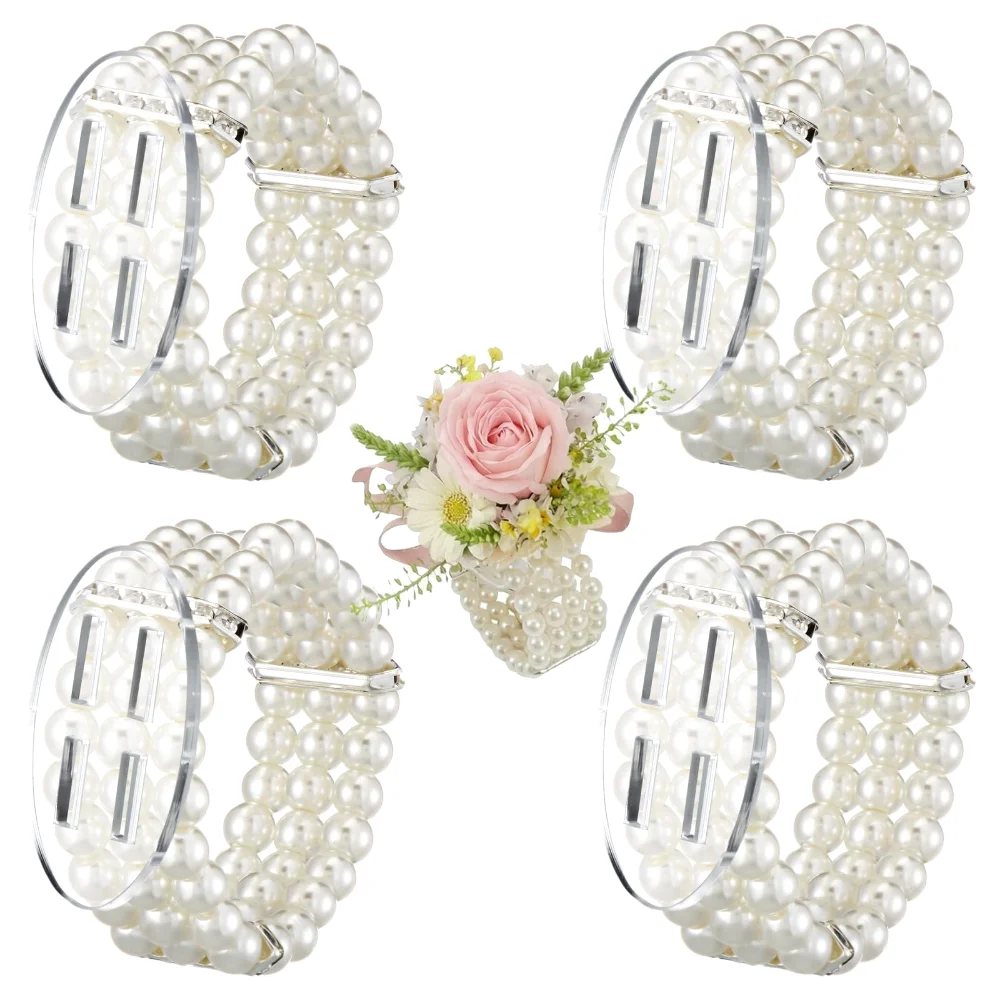
Wrist Corsage Bands, 4 sets, Ivory
Wrist Corsagesin 2 colours
★★★★☆ 4.3 · 8 family reviews
For a fuller picture of dressing a celebration beyond the flowers themselves, the working notes in Graduation Day by the Numbers apply to any event where a class of people all need the same thing at the same hour. One rule transfers directly: one lei per graduate plus two spares becomes, at a wedding, one corsage band per honoured adult plus two, and the spare is what turns a snapped elastic into a footnote.
After the wedding: the second life of a counted box
Fresh flowers end the evening in bins, and it is the quiet scandal of the industry. Silk stems end the evening back in their box, and the box has a future. Centrepiece heads become a year of table arrangements. Arch blocks disassemble into mantel sweeps. A dozen spare stems and a plain wreath form from our craft shelf turn into a door piece by the first anniversary.
Storage is the one care instruction that matters: heads shaped, stems loosely upright or flat in their original box, away from a hot attic. Dust lifts with a hair dryer on cold from a hand’s distance. A crushed head recovers over a steaming kettle in under a minute, petals coaxed open while the fabric is warm. Wired stems can be re-bent through hundreds of arrangements before the wire tires, and a stem that finally does tire retires into the short-vase work where nobody asks it to stand. That is the entire maintenance manual, and it is more than most decorations ever get.
The counting page, kept honest
Every count in these notes traces back to a build you can picture: the corner cluster that opens the arch, the vase mouth that caps a centrepiece, the chair row that repeats down an aisle. Prices we leave to the cards above, where our update routine can reach them, and the routine itself is written up on the page that explains how we keep figures current. The counts do not go stale. Density does not care what a stem cost.
The shelf these packs live on is the Hotop flowers and greenery aisle, from single accent bundles to the hundred-twenty-piece boxes that dress a venue outright. For the middling wedding worked through above, the order is short: one eighty-piece box and one forty in the main shade, a twenty in the accent. Count the arch, count the tables, add the margin, and buy the whole plan in one pass. The averaging eye will never know how little drama it took.
